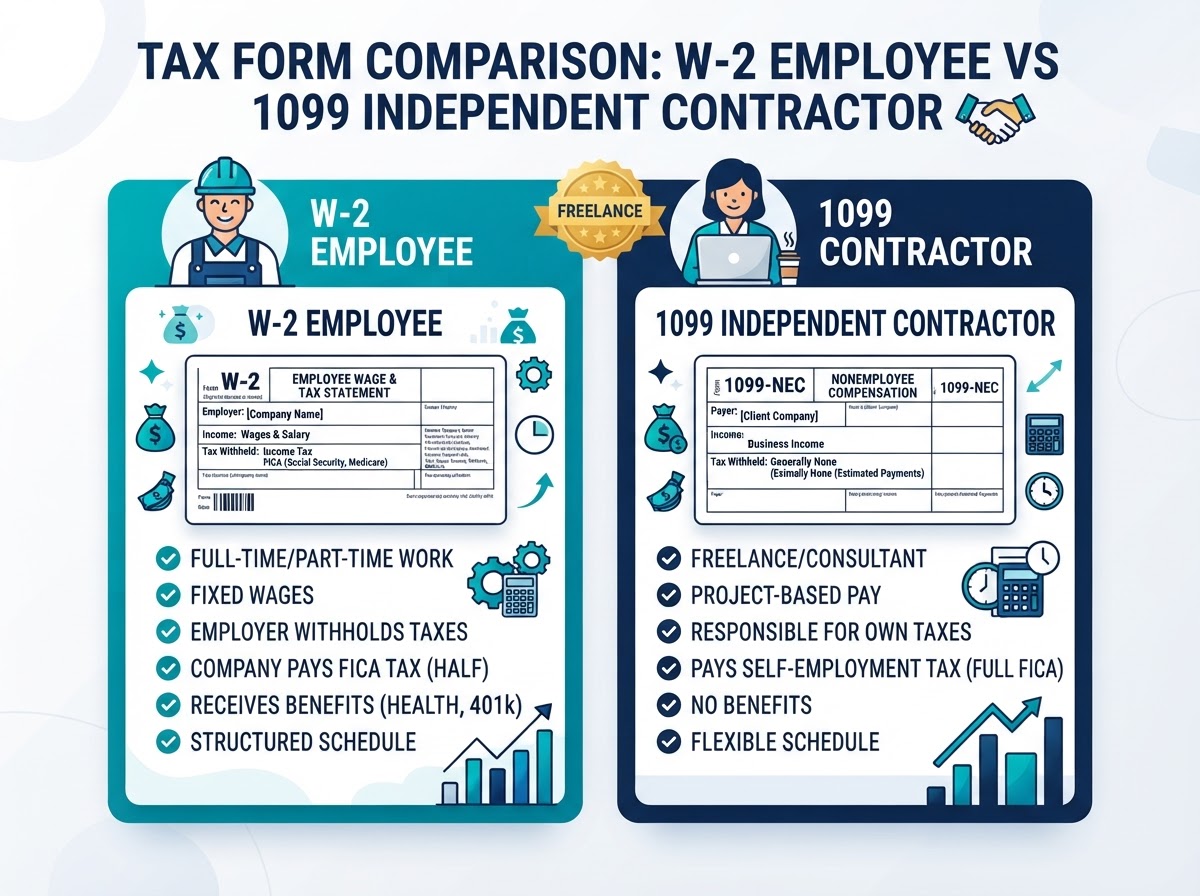

The Deduction Gap
Small business owners lose thousands of dollars every year not to the tax code but to the deductions they never claim. Most owners know about the obvious write-offs — inventory, wages, rent — but the tax code is full of less-visible provisions that reward the filers who know to look. The gap between what a typical small business could deduct and what it actually deducts is often five figures, and closing that gap is one of the highest-return investments a business owner can make.
This article walks through the deductions most commonly missed by sole proprietors, single-member LLCs, and small S-corporations. Some require documentation you can assemble in an afternoon; others reward a change in how you track expenses year-round. All of them are legal, all of them put money back in your business, and none of them require a CPA to understand — though having one in your corner ensures nothing slips.
The Home Office Deduction
The home office deduction is the most commonly skipped deduction among small business owners, partly because of outdated myths about audits and partly because the rules were genuinely complex in prior decades. For 2026, the deduction allows you to write off the business portion of your home — either actual expenses (a percentage of rent, utilities, insurance, and depreciation) or a simplified method of $5 per square foot up to 300 square feet, for a maximum of $1,500.
The key requirement is that the space be used regularly and exclusively for business. A spare bedroom that doubles as a guest room does not qualify; a dedicated office does. The deduction is claimed on the business portion of your return, and while it cannot create a loss, it reduces business income dollar-for-dollar. For many owners, the actual-expense method yields more than the simplified method, particularly in high-cost areas.
Vehicle and Mileage
If you drive for business — to client sites, to the bank, to the post office — you can deduct either the actual costs of operating your vehicle or the standard mileage rate. For 2026, the standard mileage rate reflects the cost of fuel, maintenance, depreciation, and insurance bundled into a per-mile figure that is the simplest way to track. The alternative — actual expenses — requires meticulous records but can yield more for vehicles with high operating costs.
The most common mistake is failing to track mileage. Without a log, the IRS can disallow the deduction entirely, and reconstruction after the fact is rarely accepted. A simple app or a notebook in the glove box solves this, and the deduction adds up quickly: a self-employed consultant driving 10,000 business miles in 2026 can deduct a substantial amount from business income.
Retirement Contributions
Retirement contributions for the owner are one of the most powerful deductions available — and one of the most overlooked by owners who assume they are too small to bother. A SEP-IRA allows you to contribute up to 25% of your net self-employment earnings (with a high dollar cap), and a Solo 401(k) offers both an employee and employer contribution that can shelter a substantial portion of business income from tax.
The deadline to establish and fund a SEP-IRA or Solo 401(k) extends to the filing deadline of your return including extensions, meaning you can make 2026 contributions as late as October 2027 if you file an extension. This makes retirement contributions one of the few deductions you can still act on after the year ends — a critical tool for owners who receive a large balance due and want to reduce it before filing.
Health Insurance and Section 199A
Self-employed health insurance premiums are deductible as an adjustment to income — not as an itemized deduction — meaning you get the benefit even if you take the standard deduction. For 2026, if you are self-employed and pay for your own health insurance, you can deduct the premiums for yourself, your spouse, and your dependents, reducing your adjusted gross income directly.
The Section 199A qualified business income deduction is a 20% deduction on net business income from pass-through entities — sole proprietorships, partnerships, and S-corporations. For many small businesses, this is a straightforward 20% reduction in taxable business income, though higher-income filers in certain service trades face limitations. The QBI deduction is automatic in most cases but is worth confirming, as it can represent thousands of dollars in savings and is often the largest single deduction on a small business return.
Less Obvious Deductions
Beyond the headline deductions, a long list of smaller write-offs adds up. Professional education and training, business-related subscriptions and software, professional dues and licenses, business meals at 50%, bank fees on business accounts, and the cost of preparing your tax return itself are all deductible. A cell phone used partially for business, internet service, and even a portion of your utility bills when you have a qualifying home office can all reduce taxable business income.
The principle is that any ordinary and necessary expense for your trade or business is deductible — ordinary meaning common in your industry, and necessary meaning appropriate and helpful. The trap is not the rules but the record-keeping. Mixing business and personal expenses in a single checking account, failing to keep receipts, or paying for business items with cash all erode your ability to substantiate the deduction if examined.
Build the System Before You Need It
The difference between a small business that captures every deduction and one that does not is almost always a system: a separate business bank account, a mileage log, a receipt-tracking habit, and a quarterly review with a professional who knows your industry. The tax code rewards the organized and quietly taxes the disorganized, year after year.
If you have not reviewed your deductions with a professional in the last twelve months, you are almost certainly leaving money behind. Our small business clients receive a year-end planning session that identifies every available deduction and a strategy for documenting each one. The cost of that review is itself deductible — and the savings it uncovers typically pay for it many times over.