The 2026 Inflation Adjustment
Each year the IRS adjusts more than 60 tax provisions for inflation, and the 2026 tax year is no exception. These annual adjustments are designed to prevent bracket creep — the phenomenon where inflation pushes your wages into a higher tax bracket even though your real purchasing power has not increased. For 2026, the IRS expanded the income thresholds for every filing status and raised the standard deduction, meaning many filers will keep more of their income before the top marginal rates apply.
The adjustments are calculated using chained inflation measures, which tend to grow slightly more slowly than headline inflation. Even so, wages and costs have risen enough over the last twelve months that the 2026 numbers represent a meaningful shift for most households. Understanding where your income falls in the new brackets is the first step in estimating your refund or balance due and in planning the timing of any year-end moves.
New Standard Deduction Amounts
The standard deduction rises for every filing status in 2026. Single filers see an increase to $16,200, while married couples filing jointly benefit from a $24,400 standard deduction — up from the prior year. Head of Household filers, who already receive a larger deduction than single filers, see their amount rise to $24,400 as well. These increases reduce taxable income for the majority of taxpayers who do not itemize.
For most filers, the standard deduction delivers more tax savings than itemizing would. Only when your total of mortgage interest, state and local taxes, charitable contributions, and other deductible expenses exceeds the standard amount does itemizing make sense. With the standard deduction now higher than ever, the threshold for itemizing to pay off is steep — but high-tax states and large medical or charitable expenses can still tip the balance in your favor.
Marginal Bracket Thresholds
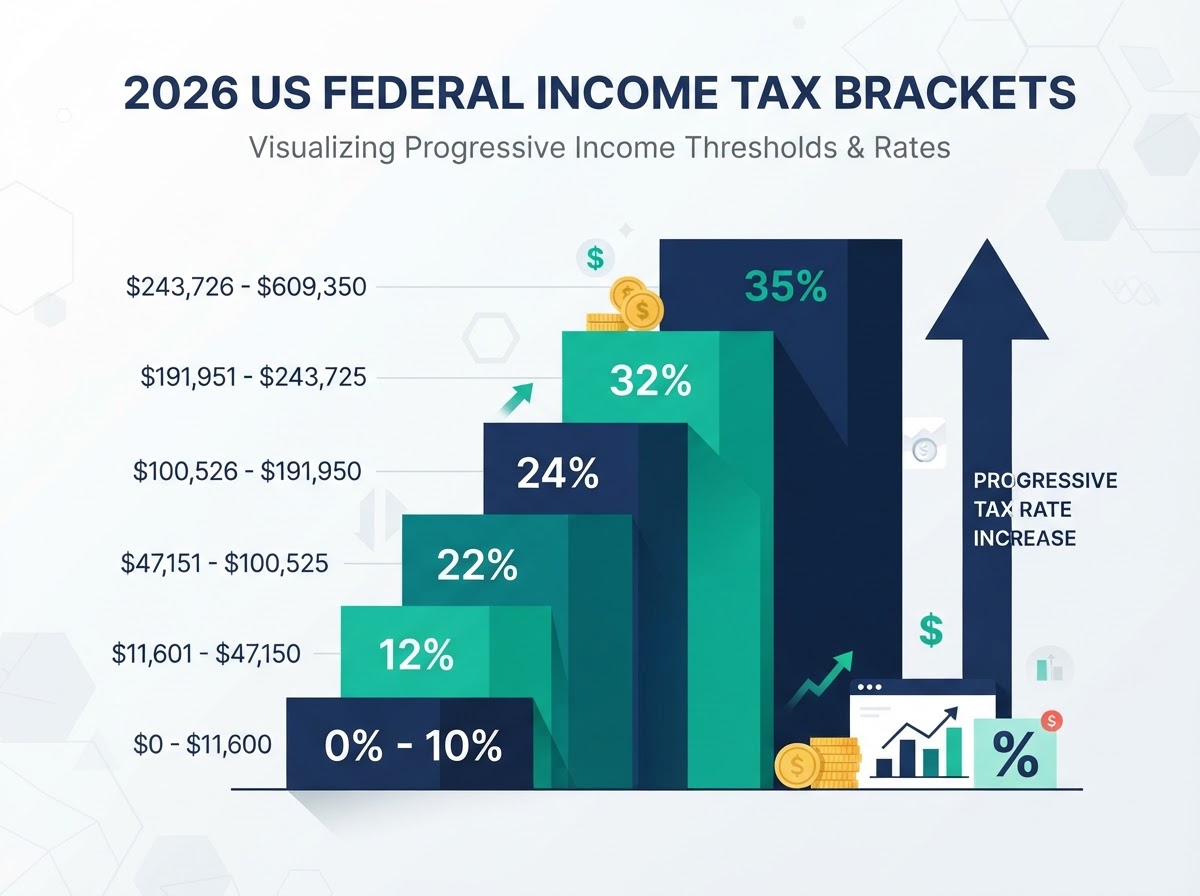
The 2026 brackets continue the seven-rate progressive structure: 10%, 12%, 22%, 24%, 32%, 35%, and 37%. The income levels at which each rate applies have been pushed upward for inflation. For single filers, the 22% bracket now begins above $50,400 of taxable income, while married couples filing jointly stay in the 12% bracket until $100,800. Head of Household filers enjoy a wider 12% bracket that extends to $67,450, reflecting the policy intent to support single parents and guardians.
The 37% top rate applies only to income above $627,450 for married couples and $373,725 for single filers. Because the brackets are progressive, moving into a higher bracket does not mean your entire income is taxed at the higher rate — only the portion above the threshold is. This detail trips up many filers and is the single most common misunderstanding our preparers correct during appointments.
What This Means for Your Refund
Higher standard deductions and wider lower brackets generally mean lower tax liability for the same income compared to prior years — which often translates to a larger refund if your withholding has not changed. If your employer continues withholding at 2025 levels, you may have had more tax taken out than necessary, creating a refund. Conversely, if you received a raise that pushed you into a higher bracket but your withholding did not adjust, you could owe.
This is exactly why a mid-year paycheck review is so valuable. The IRS Tax Withholding Estimator can help, but the most accurate way to predict your outcome is to run your numbers through a 2026 calculator that applies the new brackets, standard deduction, and credits in real time. Our 2026 Tax Refund Calculator does precisely this — and it includes the Child Tax Credit and Earned Income Tax Credit, both of which can dramatically change your bottom line.
Credits and Phaseouts to Watch
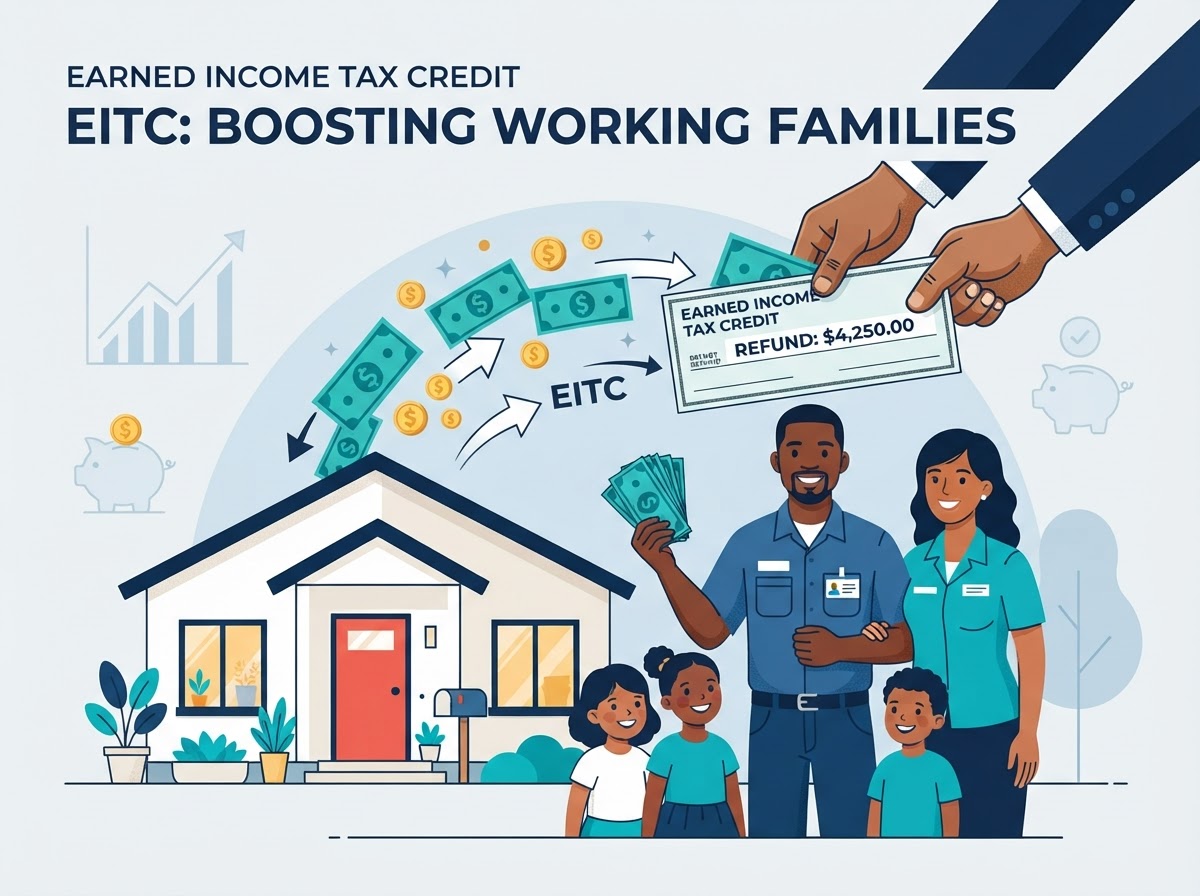
Two credits deserve special attention in 2026. The Child Tax Credit holds at $2,200 per qualifying child but begins to phase out once your modified adjusted gross income exceeds $400,000 for married filers ($200,000 for others). The Earned Income Tax Credit — one of the most generous refundable credits available — can put up to $8,231 back in the pockets of families with three or more qualifying children. Many eligible filers miss this credit each year, leaving real money on the table.
If your 2026 income changed materially — a new job, a side business, a retirement, or a new dependent — your eligibility for these credits may have shifted. Even a modest change in income can move you into or out of phaseout ranges, and a dependent turning 17 can end CTC eligibility entirely. A professional review surfaces these opportunities before the filing deadline.
Planning Ahead for 2026
Now is the ideal time to look at the full year ahead. If you expect a balance due, you can still act — increasing withholding through your employer, making an estimated tax payment, or front-loading deductible retirement contributions can all reduce or eliminate a surprise bill. If you expect a refund, organizing your documents early and filing in January rather than April gets your money back weeks sooner.
Every bracket change, every credit adjustment, every deduction update is an opportunity — or a trap. The filers who benefit most are the ones who understand their position in the new landscape and act before the window closes. That is precisely what our team helps you do, one return at a time.