When Refunds Stall
The IRS issues most refunds within three weeks of e-filing, but that timeline assumes a clean return. When a return trips a flag — a mismatched name, a missing form, an arithmetic error — it can sit in review for six to twelve weeks or longer. The difference between a refund in January and a refund in April is very often a single avoidable mistake.
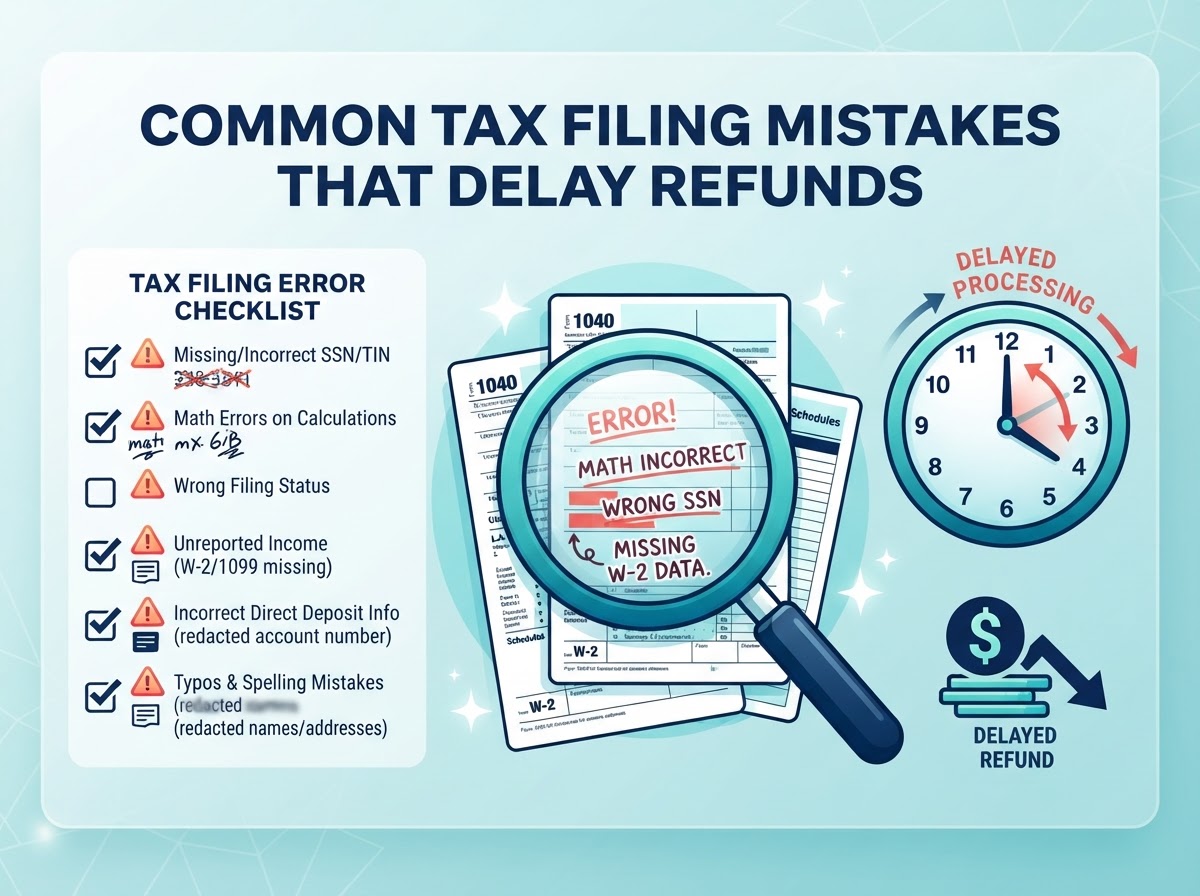
After preparing thousands of returns, we see the same five errors repeatedly. None of them are exotic; all of them are preventable with a few minutes of attention before you submit. Here is what to watch for so your refund arrives on time.
1. Name and Social Security Mismatches
The single most common cause of delay is a name or Social Security number that does not match what the IRS has on file. This usually happens with a spouse's or dependent's name — a recently married filer who has not updated their name with the Social Security Administration, a child whose name was entered with a nickname or a middle name instead of the legal name, or a simple transposition of digits in a Social Security number.
The IRS cross-references every name and number against Social Security Administration records, and a mismatch sends the return to a human reviewer. The fix is simple: verify every name against the corresponding Social Security card before filing, and update the SSA before filing if a name has changed. This one step eliminates the most common delay source entirely.
2. Missing or Incorrect Income Documents
The second most frequent delay comes from income that does not match what the IRS received. Employers and banks send W-2s and 1099s to both you and the IRS, and the agency's automated system matches every return against those documents. A forgotten 1099 from a side gig, a bank interest form that arrived in January but was filed with last year's papers, or a corrected W-2 that arrived after you filed all create mismatches that trigger review.
The protection is to wait until you have received every income document before filing. Employers must send W-2s by January 31, and most 1099s arrive by then as well, but some — particularly investment and corrected forms — can arrive in February or March. Filing in February instead of January, after confirming you have all forms, prevents the most common income mismatch.
3. Filing Status Errors
Choosing the wrong filing status is a less obvious but common delay source. A filer who qualifies as Head of Household but files as Single pays more tax and may also trigger questions from the IRS about dependents. Conversely, a filer who claims Head of Household without meeting the residency requirements — the qualifying person must have lived with them for more than half the year — can have the return rejected and the refund frozen.
The rules around filing status are nuanced, particularly for recently divorced or separated filers, and for households with adult dependents or elderly parents. Reviewing the definitions before choosing a status — or having a preparer confirm the choice — eliminates this category of delay and often uncovers a more favorable status that reduces tax.
4. Math Errors and Typos
It sounds too basic to mention, but arithmetic errors and transposed numbers still cause delays every filing season. A refund amount calculated incorrectly, a withholding figure entered in the wrong box, or a dollar amount rounded inconsistently can all send a return to manual review. The risk is highest for paper filers and for filers using spreadsheets without automated checks.
E-filing with reputable software or a preparer eliminates most arithmetic errors because the calculations are automated, but typos in input data — a withholding amount entered as $12,000 instead of $1,200 — still slip through. Double-checking every figure against the source document before submitting catches these, and a second pair of eyes — a spouse, a preparer — is the most effective safeguard.
5. Bank Account Errors
The fifth common mistake is not a delay in processing but a delay in receiving the refund: an incorrect routing or account number for direct deposit. If the number is wrong but points to a valid account at the wrong institution, the refund can be misdirected and require weeks of paperwork to recover. If the account is closed, the refund bounces back to the IRS and is issued as a paper check, adding weeks to the timeline.
The fix is to verify the routing and account numbers directly against a check or a bank statement — not from memory. Many filers confuse the routing number with the account number or transpose digits. Confirming the numbers before filing, and using the same account each year, eliminates this source of refund misdirection entirely.
Filing Clean the First Time
Every one of these errors is preventable, and preventing them is almost always faster than correcting them. A return that is accurate, complete, and verified against source documents sails through the IRS system in the standard three-week window. A return with even one error can double or triple that timeline, and the stress of waiting compounds the cost.
If you are filing yourself, take the time to verify every name, number, and account detail before submitting. If you are working with a preparer, the verification is part of the service. Our team reviews every return against source documents and confirms direct deposit details before filing, which is why our clients' refunds consistently arrive on time — the first time, not the third.