The Credit Millions Miss
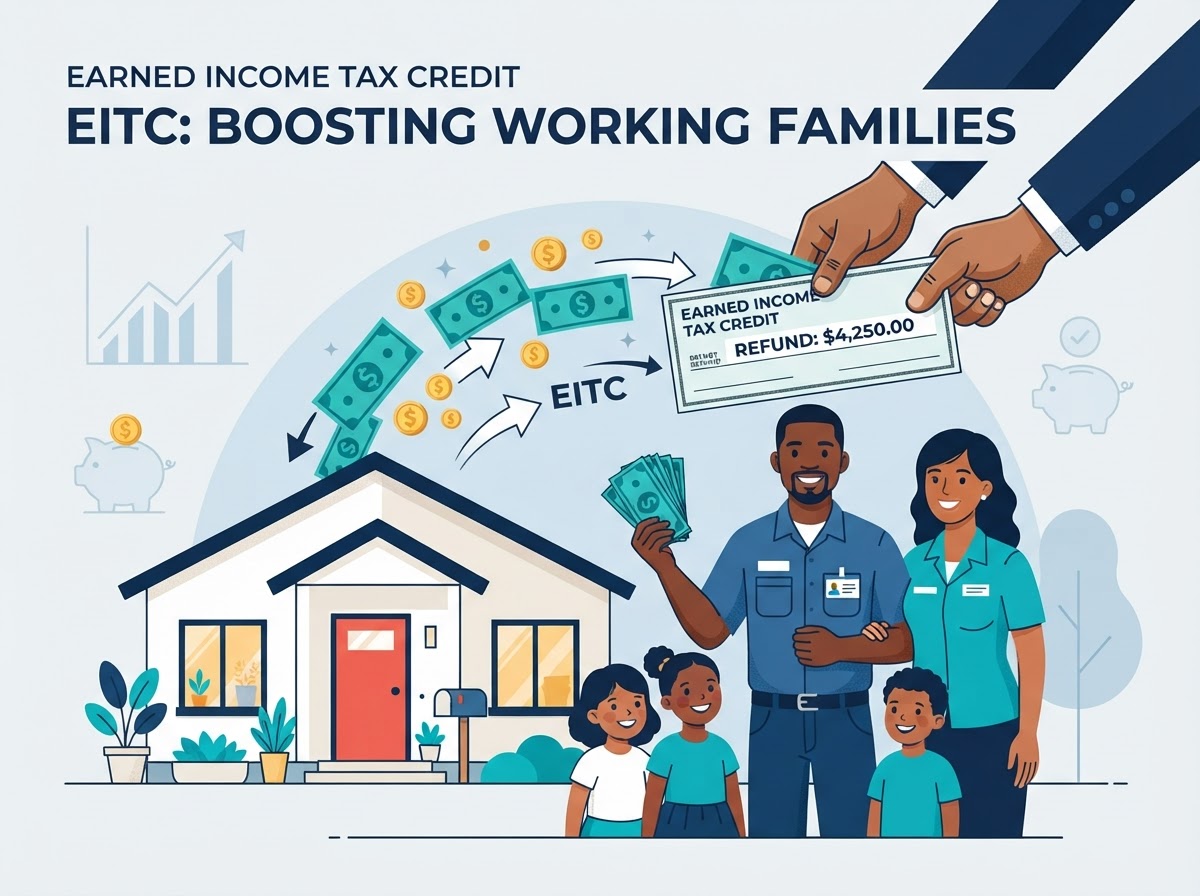
The Earned Income Tax Credit is the most under-claimed refundable credit in the American tax code. Designed to reward work and offset payroll taxes for low- and moderate-income filers, the EITC can return up to $8,231 for 2026 to a family with three or more qualifying children. Yet the IRS estimates that one in five eligible filers never claim it — leaving billions unclaimed every single year.
The reasons are familiar: filers assume their income is too high, do not realize a part-time or gig income qualifies, or get discouraged by the credit's reputation for complexity. This article cuts through the noise. If you earned income from work in 2026, you may be eligible — and the credit is worth real money.
How the EITC Is Calculated
The EITC is a function of two numbers: your earned income and your number of qualifying children. The credit phases in as your earned income rises — the more you earn from work, up to a plateau, the larger the credit — then plateaus at a maximum before phasing out as your total income rises. For 2026, the maximums are $664 for no qualifying children, $4,427 for one, $7,316 for two, and $8,231 for three or more.
The phase-in rate is generous: for each additional dollar of earned income, the credit grows by a meaningful percentage until the plateau. The phase-out is gentler but still real. The practical effect is that the EITC rewards work — earning more generally increases the credit until you reach the plateau — which is the opposite of most benefit programs that simply cut off at a threshold.
Income Limits for 2026
Eligibility depends on both earned income and adjusted gross income, both of which must fall below limits that vary by filing status and number of children. For 2026, a married couple with three or more children can earn up to roughly $70,000 and still qualify, while a single filer with no children has a much lower ceiling. The full tables are detailed, but the takeaway is that the income limits are higher than most people assume.
Investment income is also capped: for 2026, if your investment income exceeds $12,350 you are not eligible for the EITC regardless of your earned income. This rule catches some filers by surprise, particularly retirees with substantial dividend income who also work part-time. Checking the investment income limit before assuming eligibility is wise.
Who Qualifies as a Child for the EITC
The qualifying child rules for the EITC are broader than for the Child Tax Credit. A child can be your son, daughter, stepchild, grandchild, sibling, or the descendant of any of these, and the child must be under 19 — or under 24 if a full-time student — or permanently and totally disabled. The age cap that disqualifies a 17-year-old from the CTC does not apply here, which is a common source of confusion.
The child must have lived with you in the United States for more than half the year. Unlike the CTC, the EITC is only available to filers with a Social Security number who are also U.S. citizens or resident aliens. The residency and identification rules are strict, but the broader age definition means many families who lose the CTC when a child turns 17 can still claim the EITC for that child.
The Most Overlooked Filers
Three categories of filers routinely miss the EITC. First, gig workers and independent contractors who earn modest income from a side business — driving, delivery, freelance work — often do not realize their net earnings count as earned income. Second, grandparents raising grandchildren assume the child must be their own, missing that grandchildren can qualify. Third, filers without qualifying children often skip the EITC entirely, not knowing a small credit exists for workers aged 25 to 64.
The no-children credit is small — $664 in 2026 — but it is available to childless workers who are at least 25 and under 65, and it is entirely refundable. For a young worker earning $20,000, that is real money. The takeaway is simple: if you earned income from work in 2026 and are in the income range, check the EITC. You may be leaving money on the table.
How to Claim the EITC
The EITC is claimed on your federal return by completing the relevant schedule. The credit flows directly to your refund or to offset any balance due, and because it is refundable, you can receive it even with no tax liability. The calculation involves your earned income, adjusted gross income, and the number of qualifying children — all of which our 2026 Tax Refund Calculator handles automatically so you can see your estimated credit before you file.
Because the IRS scrutinizes EITC claims, accuracy is essential. Errors can delay your refund by months and, in cases of reckless disregard, can bar you from claiming the credit for up to a decade. A preparer who understands the rules and documents your eligibility is the single best protection against delay or denial. Our team has helped thousands of filers claim the EITC correctly and on time.
Don't Leave It Behind
The EITC exists to reward work and to put money back in the pockets of the people who need it most. It is generous, it is refundable, and it is routinely under-claimed. If you earned income from work in 2026 and your income falls in the eligible range, the credit may be yours — and a fifteen-minute conversation with our team can confirm it.
The numbers speak for themselves: $8,231 for a family with three or more children, $7,316 for two, $4,427 for one. These are life-changing amounts for many households, and they are waiting for the filers who know to look. Do not be one of the one in five who lets the EITC slip by — claim what you earned.